
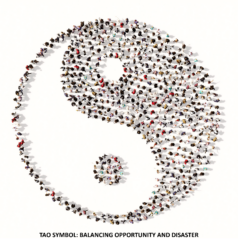
The title question is being raised by employees and those seeking employment in every sector. Recent college and university commencement speeches mentioning artificial intelligence have, in some cases, been met with boos. That reaction may surprise some leaders, but perhaps it shouldn’t. Imagine spending four or more years earning a degree, accumulating debt, and preparing for a career, only to hear that the very skills you worked so hard to acquire may soon be automated. For many graduates, AI does not feel like an exciting innovation. It feels like an existential threat. That concern is understandable.
Historically, technology has disrupted labor markets. The Industrial Revolution displaced artisans. Automation transformed manufacturing. The Internet redefined retail, media, and communication. Each wave created new opportunities but not always quickly, evenly, or painlessly. Workers often bore the cost of transition. Will they need to bear additional costs due to the adoption of AI? Today’s anxiety about AI reflects a deeper concern. Graduating seniors and workers are asking, “Will there still be a meaningful place for me in the workforce?” That question deserves empathy rather than dismissal.
AI is already performing tasks once thought uniquely human like writing, coding, research, analysis, customer support, legal review, radiology augmentation, and even creative ideation. Entry-level jobs may be particularly vulnerable because many involve repetitive cognitive tasks. Graduates are asking important questions such as:
- If AI can do the first draft, what happens to junior analysts and writers?
- If coding assistants can automate programming tasks, how do new engineers learn?
- If automation improves productivity, who benefits? The worker, the company, or both?
- Will AI widen economic inequality?
These are not anti-technology questions. They are human questions. Leaders who dismiss these fears risk making the same mistake organizations often make during major transformation efforts. Too often they underestimate the emotional side of change. The impact is not limited to a single sector.
Ironically, the rise of AI may make distinct human capabilities even more important. As information becomes abundant and commoditized, uniquely human skills such as these rise in value:
- Creativity
- Critical thinking
- Ethical judgment
- Emotional intelligence
- Collaboration
- Leadership
- Communication
- Empathy
- Trust-building
Having spent my career in healthcare, I am especially concerned about how AI will affect the people delivering care who are focused on improving health. Healthcare professionals and support staff are already fatigued from workforce shortages, burnout, growing documentation burdens, cybersecurity disruptions, financial pressures, and wave after wave of change. In that environment, AI is not an abstract concept. It can be a very real opportunity and a very real concern for workers and leaders alike.
Employees want understandable answers to very personal questions. “Will my job change? Will my work become more meaningful or more difficult? Will I still be needed?” Adding to their concerns, “How will I care for my family?” At the same time, managers and executives are wrestling with an equally important challenge. “How do we generate excitement about AI’s potential while honestly addressing fears about disruption, workforce impact, and the future of work?”
AI also impacts patients and families who want compassion, empathy, trust, and clinical judgment, not an algorithm replacing the caregiver at the bedside. A physician delivering difficult news, a nurse recognizing subtle changes in a patient’s condition, a respiratory therapist responding to distress, or a patient access representative calming an anxious family member simply cannot be automated.
AI vendors are often focused on the providers and staff. Why? Healthcare is overloaded with administrative requirements. Clinicians routinely spend hours documenting care, responding to inbox messages, completing prior authorizations, navigating fragmented workflows, justifying their judgment in response to denials, and searching for information across systems. Support staff face repetitive scheduling, coding, billing, registration, call center, supply chain, and compliance-related tasks that can be both exhausting and time-consuming. These are areas and activities where AI has the potential to shift the conversation.
The most promising use of AI in healthcare may not be replacing workers, but relieving burdens. Imagine if you will:
- physicians spending less time documenting and more time engaging with patients and families,
- nurses recovering hours lost to repetitive charting,
- revenue cycle teams having assistance identifying denials and reducing rework,
- call center teams supported by AI-enabled tools that answer routine questions while allowing staff to focus on more complex patient concerns, and
- supply chain teams predicting shortages before they disrupt care.
For support staff across healthcare entities of all sizes, from rural hospitals and critical access facilities to large academic medical centers and national health systems, AI could reduce tedious work while improving accuracy, efficiency, and responsiveness.
Smaller organizations may benefit the most from AI. Many community hospitals and physician practices struggle with limited staffing, thin operating margins, and workforce shortages. AI-enabled automation done well could help smaller providers gain access to capabilities once available only to large systems with significant resources. Messaging the benefits is critical.
Too often, the discussions in the C-suite focus on cost containment. In healthcare, the question should never simply be, “How much labor can AI replace?” Here’s a long list of questions you should ask.
- How will this benefit our patients and their families?
- Can we implement AI in such a way as to improve the “sacred trust” that patients place in their providers? Can AI strengthen the trust between the patient’s family and the healthcare professionals?
- How can AI help caregivers and support staff spend more time doing the work only humans can do?
- How will our efforts align with the Quintuple Aims?
- How can we ensure there is a “human in the loop” (a phrase I often hear) to amplify clinical judgment and critical thinking based on the human experience?
- What should we do to protect a patient’s privacy and confidentiality?
- How will we train today’s healthcare workforce and tomorrow’s clinicians and leaders to work effectively with the new AI-enabled tools?
- How can we govern AI transparently, so patients and caregivers understand when, where, and how it is being used?
- Can AI improve workflows?
And perhaps most importantly is a Mission-based question, “Will AI help us become more human in healthcare?” The future of work in healthcare should be defined by empowering, not replacing, members of the workforce. The organizations that succeed will be the ones asking, “How can technology help our people thrive while improving the lives of the patients and families we serve?” In healthcare, technology should never replace humanity. At its best, it should strengthen it.